 PH Mundial – Port Harcourt Online Newspaper News across the Niger Delta

Related Articles


By Amos Odhe, Yenagoa
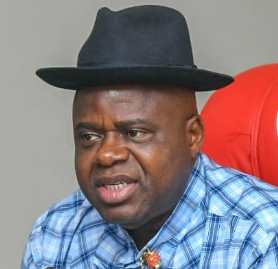
The governor of Bayelsa State, Senator Douye Diri, has called for an amendment of the Petroleum Industry Act (PIA) in order to address the flaws in the legislation.
Governor Diri said the review would go a long way in tackling the ongoing crisis between oil companies and their host communities.
Describing the Act as a time bomb, the governor emphasised that since the country operates a federal system of government, it was an aberration for the Federal Government to deal directly with oil producing communities while excluding the states and local governments.
Senator Diri stated this on Tuesday when the new commander of the Joint Military Task Force, Operation Delta Safe (OPDS), Rear Admiral Eugenio Ferreira, and other officers paid him a courtesy visit at the Government House, Yenagoa.
A press release by his chief press secretary, Daniel Alabrah, quoted the governor as saying that the oil producing states and the local governments were now being called upon to intervene in resolving issues between the oil companies and their host communities.
He said, “We are happy we have a PIA that guides the industry. However, we saw a lot of flaws even before the Bill was assented to. At that point, l referred to the Act as a time bomb.
“I also said that there would still be serious crisis between the oil producing communities and oil companies and by extension, the Federal Government. One of such indications is that the Federal Government in that Act successfully excluded the state and local governments to deal directly with the communities.
“In recent times, we have started seeing crisis between the communities and oil companies over the signing of Memorandum of Understanding (MoU) and other issues. And the state governments have been called to intervene. So that Act needs further amendment.”
Diri said both state and local governments should be incorporated into the oil industry legislation to enable them contribute towards ensuring peace and stability in the industry.
The state’s helmsman also called for collaboration between the oil producing states and relevant institutions to bring development closer to the people as one of the surest ways in tackling oil theft, pipeline vandalism and illegal refining activities.
He said: “While as a government, we would not support anybody involved in oil theft, illegal oil refining and all other acts that contribute to pollution, underdevelopment and killings, we would also like to state that the best way to tackle the issues is to fast-track development to these areas. We can assure you that these same people will become protectors of oil installations domiciled in the Niger Delta.”
Diri welcomed Rear Admiral Ferreira and urged him to join hands with the state government in surmounting the security challenges in his area of operation.
Earlier, the new OPDS Commander, Rear Admiral Ferreira, said he was posted to the command in May this year.
He noted that the OPDS was established with a mandate to protect oil infrastructure in the Niger Delta and ensure a stable and peaceful environment for all.
While expressing gratitude to the state government for the support given to the command, Ferreira said they had achieved 80% success of attaining their mandate, which he attributed to the kinetic and non-kinetic approach of the military.
He commended Governor Diri for his support to the task force and pledged that the command would continue to cooperate and collaborate with the state government to ensure peace and security of the state.