Business

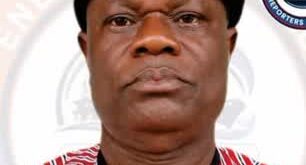
Energy, Maritime Reporters Unveil National Chairman, Martins Giadom

By Paul Williams The National Chairman, Energy and Maritime Reporters of Nigeria (EMR) has unveiled the official portrait of its National Chairman, Comrade Martins Giadom. The association is committed to strengthening professional journalism, advancing maritime and energy reporting, and promoting the collective interests of media practitioners across Nigeria. Comrade Martins …

Read More »

Oil Divestments Shortchange Niger Delta Communities, Threaten HRDs ~ AfriLaw

By Paul Williams  Recent onshore divestments by oil multinationals are shortchanging host communities in the Niger Delta and increasing risks for human rights defenders (HRDs) operating in the region.  This was part of the highlights at the “Extractive Host Communities and Human Rights Defenders Training Workshop” organised by the African Law Foundation (AfriLaw) in Port Harcourt on Thursday.  The one-day session was organised in partnership with the National Human Rights Commission (NHRC), Nigeria Working Group on the VPs (NWGPs) and Voluntary Principles Initiative (VPI), with funding support from the Zero Tolerance Initiative (ZTI) and True Cost Initiative (TCI), USA.  It brought together community leaders, journalists and civil society actors from extractive host communities across the region, and urged proactive risk management and stronger remediation measures for communities and human rights defenders.  AfriLaw’s Executive Director, Chinwike Okereke Esq., said, “Divestment is not automatic. It’s a process, and there’s a transfer of liabilities and assets. In all those processes, the Niger Delta communities were not even given the chance to have a say or contribute. The community was neglected.”  Okereke described recent exits by Shell and other oil firms as “irresponsible” and criticised federal approval of deals that ignored legacy environmental damage and failed to secure remedies for affected people.  He added, “For them to approve that without the interest of the communities is negligence of their duty.”  Okereke urged federal agencies and the NHRC to press for remediation and compensation where corporate activities have caused environmental and social harm. “The people need justice, and justice is about remedy for the people,” he said.  AfriLaw’s Executive Director noted that the programme combines legal awareness with practical guidance so frontline actors can reduce escalation during environmental and rights crises and pursue redress more effectively.  He described the training as “vital to empower and promote the protection of human rights defenders in the extractive sector of Nigeria using the VPI and UNGPs guidance tools.”  Okereke said Port Harcourt is the fifth stop in a nine-state programme, adding that the regional rollout will continue.  He, however, stressed the need for consultative divestment processes, stronger mechanisms to ensure proper transfer of liabilities and company-funded remediation for legacy harms.  He urged civil society, media and national institutions to work together so defenders can carry out their work without fear of reprisal.  Executive Director of Access Africa for Rights and Development Initiative, Dr. David Vareba, warned that shrinking civic space and weak safeguards leave HRDs exposed to reprisals.  Vareba said, “Those who suffer the outcomes of this civic space that is being shrunk are human rights defenders, because they are the ones who are out there to defend the rights of the common people.”  He further cited oil spills, alleged land-grabbing and episodes of police brutality where defenders are often targeted after mobilising on behalf of communities.  Vareba said that to change the narrative, trainers at the workshop introduced participants to the Voluntary Principles on Security and Human Rights, an international framework first issued in 2000, and emphasised practical skills such as risk analysis, stakeholder mapping, documentation and community engagement.  He noted that “Human rights defenders ought to analyse risk ahead and then proactively resolve what will lead to those human rights violations,” while arguing that these defenders often operate reactively and can be manipulated through bribery of community leaders or capture of regulators if they lack tools to anticipate threats.  NHRC’s Executive Secretary, Dr. Tony Ojukwu, described the workshop as a way to strengthen collaboration between defenders and state institutions and to make complaint mechanisms more accessible.  Ojukwu, represented by NHRC’s Rivers State Coordinator, Chinwe Okoroji, told participants, “Your being here today reflects a shared dedication to strengthening collaboration, deepening accountability, and ensuring that the principles of human dignity, justice, and equality are upheld in our society.”  He highlighted workshop sessions on who qualifies as a human rights defender, the UN Guiding Principles on Business and Human Rights (UNGPs), the Voluntary Principles on Security and Human Rights, and the NHRC’s complaint procedures.  He stressed that “The training is aimed at strengthening the institutional capacity of individuals, actors, media, CSOs by equipping them with the right techniques of defending their rights, seeking redress on disputes relating to human rights violations.”  He urged participants to use the commission’s channels to bring forward documented cases of environmental and social harm.  One of the participants, Alice Onukwugha, commended AfriLaw for organising the training. She said it afforded participants the opportunity to understand the UNGPs and Voluntary Principles on Human Rights and Security and how to deploy these to protect human rights defenders. 

Read More »

NLNG, NCDMB Boost Nigeria’s Tech Capacity, Unveil Research Hub at Rivers University

By Paul Williams  Gas company NLNG and the Nigerian Content Development and Monitoring Board (NCDMB) on Thursday broke ground for the NLNG Research and Innovation Centre for Computer and Electrical Engineering (RICCEE) at Rivers State University in a bid to expand Nigeria’s indigenous research and technological capacity.  The project, NLNG’s largest Human Capital Development Institutional Strengthening initiative to date, is designed to enhance the university’s capacity to undertake advanced, industry‑relevant research, provide specialised training and develop technological solutions in computer and electrical engineering for Nigeria’s energy and industrial sectors.  A professorial chair, structured to be a fully operational research and development unit, will be instituted in the centre to promote industry‑focused research and develop solutions to critical operational challenges, particularly for NLNG. Successful research outcomes will also have the potential to be commercialised for wider industry application.  NLNG’s Managing Director and Chief Executive Officer, Adeleye Falade, described the project as a strategic investment in Nigeria’s future and a practical demonstration of the company’s commitment to sustainable human capital development.  Falade, represented by the General Manager, External Relations and Sustainable Development, Sophia Horsfall, said the centre would strengthen the university’s ability to produce highly skilled professionals and conduct research that responds directly to industry needs.  He added that RICCEE would strengthen the connection between academic knowledge and practical industry requirements, enabling researchers and professionals to collaborate on innovations with commercial and developmental relevance.  NCDMB’s Executive Secretary, Engr. Felix Omatsola Ogbe, represented by the Director, Capacity Building, Engr. Abayomi Bamidele, described the groundbreaking ceremony as an important milestone in the implementation of the agency’s Human Capital Development objectives.  He said the project forms part of the NCDMB’s Human Capital Development Institutional Strengthening Programme, which seeks to build enduring partnerships with institutions of higher learning by providing infrastructure that enhances teaching, research, innovation and practical skills development.  Ogbe urged the centre to become a vibrant hub of discovery, creativity, enterprise and technological advancement, where students are inspired to innovate, researchers develop solutions to real‑world challenges, and industry finds reliable partners for research and development.  He also commended NLNG for its firm belief in and commitment to the project, and lauded the Governing Council, the Vice‑Chancellor and the management of Rivers State University for their commitment to academic excellence.  Vice‑Chancellor of Rivers State University, Prof. Isaac Zeb‑Obipi, said the university’s 2026–2030 strategic development plan prioritises improving academic programmes and strengthening research collaboration, innovation and entrepreneurship. He noted that the RICCEE would provide a vital platform for advancing these objectives.  “We envisage the centre as a world‑class hub where researchers and students can develop practical solutions to engineering and technological challenges, where university‑industry collaboration can flourish, and where innovative ideas can be transformed into useful products, technologies and services. The presence of NLNG and NCDMB today underscores the immense value of strategic partnerships,” he said.  He expressed profound gratitude to NLNG and NCDMB and reaffirmed the university’s commitment to ensuring that the centre is utilised productively to strengthen research, build human capacity, foster innovation and deepen collaboration with industry and educational institutions.  A release by NLNG’s Sophia Horsfall and NCDMB’s GM, Corporate Communications Division, Obinna Ezeobi, said the centre will be developed on approximately 9,336 sqm of land within the university and will accommodate specialised laboratories for Electronics and Signal Processing, Robotics and Embedded Systems, Software Engineering, and Digital Forensics and Cybersecurity, among other facilities.  According to the release, “The laboratories are designed with in‑built offices and storage areas to support research, teaching, equipment management and technical administration.  “The building will also incorporate sustainability features, including provision for solar energy, energy‑efficient lighting and environmentally responsible systems intended to reduce operating costs and support reliable research activities.  “RICCEE is one of the Institutional Strengthening Projects being implemented under NCDMB’s Human Capital Development programme. The broader intervention is aimed at improving the capacity of institutions of learning through upgraded infrastructure, modern research facilities, technical equipment and industry‑aligned training programmes.  “The project extends Human Capital Development beyond the classroom by integrating academic instruction with research, technology development, professional training and practical problem‑solving. It will position Rivers State University as a stronger contributor to indigenous innovation and the development of solutions relevant to Nigeria’s industrial priorities,” the release said. 

Read More »

ANLCA, MWUN, Others Threaten Shutdown over Port Roads, E-Call Up at Onne

By Paul Williams   Freight forwarders and truckers at Onne Port in Rivers State have threatened to shut down operations over the poor condition of the port’s access roads and the manner in which the e-call-up system recently introduced by the Nigerian Ports Authority (NPA) is being implemented.  Six associations operating at the port, along with the Onne Youths Congress, the umbrella body for youths in Onne Community, noted that despite the huge resources accruing from Onne Port, the access roads leading to the port had become a death trap.  The associations on Wednesday, August 12, 2026, issued a four-day ultimatum to the Federal Government and the Nigerian Ports Authority to suspend the e-call-up system until facilities such as loading bays are provided and dilapidated access roads are repaired.  Chairman of ANLCA, Onne Seaport Chapter, Chief Ifeanyi Isikaku, while reading a communique, expressed the associations’ deep concern and frustration over worsening operating conditions for members and the host community.  The unions said NPA rolled out the e-call-up system without first providing adequate holding bays, prompting “the unabated illegal parking of trucks on Onne roads that has choked traffic, damaged goods and exposed workers and residents to danger.”  They also described the port’s internal access roads as “deplorable” and a “death trap,” blaming the road condition for container-fall incidents, injuries and loss of life.  Isikaku said, “We can no longer tolerate unfulfilled NPA commitments and roads that endanger lives and destroy goods. If holding bays had been provided before the e-call-up rollout, this crisis would have been avoided.”  He pointed out that the situation is unfortunate for a port that has contributed up to N487 billion in Customs revenue alone to the federal coffers.  Isikaku said Customs revenue from Onne Port Command between January and July 2026 was approximately N439 billion, with an additional N48 billion from the Oil and Gas Free Zone — a combined N487 billion over seven months.  He called on the Federal Government, through the Minister of Marine and Blue Economy, to allocate a portion of that revenue to fix and maintain internal roads and port facilities.  “Onne contributes significantly to national revenue; a fraction of the N487 billion collected between January and July should be used to repair our roads and protect workers and the host community,” he said.  The unions, among other things, demanded an immediate end to illegal parking on Onne roads to restore free traffic flow, urgent maintenance and repair of all internal access roads to prevent container falls and safeguard lives, and a ban on members’ participation in arbitrary or bogus payments associated with the e-call-up system and port transport.  Chairman of the Maritime Union of Nigeria, Eastern Port, Uche Ogbu, whose union bears the brunt of the dilapidated roads, said, “Our members will not be compelled to make arbitrary payments for a system that lacks the infrastructure to work.”  He noted the unions’ resolve on the suspension of the e-call-up system from Monday, August 17, 2026, until adequate holding bays are constructed to accommodate current truck volumes; the suspension will remain in place until all listed challenges are addressed.  Ogbu stressed that, “The suspension takes effect on August 17 and will remain until our safety and operating conditions improve.”  He said, “We are the people carrying the burden of the e-call-up levies. We the maritime workers in collaboration with other stakeholders and Onne communities are going to down tools from Monday.  “We want to draw the attention of government to the poor state of the facilities where we do our businesses. We are not saying that NPA should take action that is beyond their capacity. But they should know how to reach out to the Ministry of Marine and Blue Economy, reach out to the Managing Director of NPA and through that channel they can get to the Presidency about our plights.  “None of them are ready to live up to their responsibility. They are only interested in the e-call-up. We know that if we stop the e-call-up they will sit up and do something about our plights,” the MWUN chairman said. 

Read More »

NLNG focused on strengthening Nigeria’s gas supply, industrial capacity ~ Falade

By Paul Williams Gas company NLNG says it is committed to enhancing Nigeria’s energy security, driving sustainable growth and delivering long‑term value through operational excellence, expanded production capacity and infrastructure development. Managing Director and Chief Executive Officer Engr. Adeleye Falade, during a media chat in Lagos, highlighted the significant progress …

Read More »

Customs Area 1 Hands Over Seized Pharmaceuticals to NAFDAC

By Bon Peters The Nigeria Customs Service (NCS), Port Harcourt Area I Command, on Wednesday, July 29, 2026, handed over a consignment of seized prohibited pharmaceutical products to the National Agency for Food and Drug Administration and Control (NAFDAC). A release by the command’s public relations officer, Assistant Superintendent Barilule …

Read More »