Energy, Maritime Reporters Unveil National Chairman, Martins Giadom

By Paul Williams

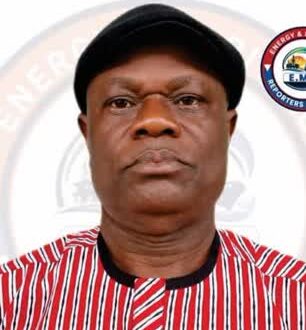
The National Chairman, Energy and Maritime Reporters of Nigeria (EMR) has unveiled the official portrait of its National Chairman, Comrade Martins Giadom.

The association is committed to strengthening professional journalism, advancing maritime and energy reporting, and promoting the collective interests of media practitioners across Nigeria.

Comrade Martins Giadom’s commitment to journalism has been recognised and celebrated by the Energy and Maritime Reporters of Nigeria (EMR) with the unveiling of his official portrait as the association’s National Chairman.

The portrait, which represents the association’s national leadership, also draws attention to Giadom’s commitment to advancing the practice of journalism, particularly among practitioners covering the energy and maritime sectors.

Under his leadership, EMR has remained focused on promoting responsible journalism and strengthening the professional capacity of journalists involved in reporting the two critical sectors.

Giadom has also continued to advocate for the collective interests of media practitioners while encouraging journalists to approach their duties with accuracy, integrity and a strong sense of professional responsibility.

The association’s emphasis on specialised reporting is aimed at improving the quality and standard of coverage within the energy and maritime industries, where accurate and credible information remains essential.

The unveiling of the portrait consequently serves not only as a representation of the person occupying the position of National Chairman, but also as a reflection of EMR’s broader commitment to professionalism and excellence in journalism.

Through the initiative, the association continues to reinforce its objectives of promoting quality reporting and maintaining high professional standards among journalists covering the energy and maritime sectors.

Share Post on

Check Also

Oil Divestments Shortchange Niger Delta Communities, Threaten HRDs ~ AfriLaw

By Paul Williams  Recent onshore divestments by oil multinationals are shortchanging host communities in the Niger Delta and increasing risks for human rights defenders (HRDs) operating in the region.  This was part of the highlights at the “Extractive Host Communities and Human Rights Defenders Training Workshop” organised by the African Law Foundation (AfriLaw) in Port Harcourt on Thursday.  The one-day session was organised in partnership with the National Human Rights Commission (NHRC), Nigeria Working Group on the VPs (NWGPs) and Voluntary Principles Initiative (VPI), with funding support from the Zero Tolerance Initiative (ZTI) and True Cost Initiative (TCI), USA.  It brought together community leaders, journalists and civil society actors from extractive host communities across the region, and urged proactive risk management and stronger remediation measures for communities and human rights defenders.  AfriLaw’s Executive Director, Chinwike Okereke Esq., said, “Divestment is not automatic. It’s a process, and there’s a transfer of liabilities and assets. In all those processes, the Niger Delta communities were not even given the chance to have a say or contribute. The community was neglected.”  Okereke described recent exits by Shell and other oil firms as “irresponsible” and criticised federal approval of deals that ignored legacy environmental damage and failed to secure remedies for affected people.  He added, “For them to approve that without the interest of the communities is negligence of their duty.”  Okereke urged federal agencies and the NHRC to press for remediation and compensation where corporate activities have caused environmental and social harm. “The people need justice, and justice is about remedy for the people,” he said.  AfriLaw’s Executive Director noted that the programme combines legal awareness with practical guidance so frontline actors can reduce escalation during environmental and rights crises and pursue redress more effectively.  He described the training as “vital to empower and promote the protection of human rights defenders in the extractive sector of Nigeria using the VPI and UNGPs guidance tools.”  Okereke said Port Harcourt is the fifth stop in a nine-state programme, adding that the regional rollout will continue.  He, however, stressed the need for consultative divestment processes, stronger mechanisms to ensure proper transfer of liabilities and company-funded remediation for legacy harms.  He urged civil society, media and national institutions to work together so defenders can carry out their work without fear of reprisal.  Executive Director of Access Africa for Rights and Development Initiative, Dr. David Vareba, warned that shrinking civic space and weak safeguards leave HRDs exposed to reprisals.  …

Leave a Reply

Your email address will not be published. Required fields are marked *