 PH Mundial – Port Harcourt Online Newspaper News across the Niger Delta

Related Articles


By Kelechi Nwaucha
In the wake of economic headwinds buffeting the country, the Fiscal Responsibility Commission (FRC) has urged Nigerians to take advantage of the Fiscal Responsibility Act (FRA), particularly Section 51, which empowers them to hold governments at the three tiers accountable.
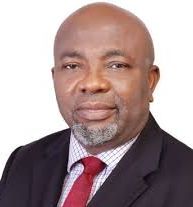
This was the message Executive Chairman of the Fiscal Responsibility Commission (FRC), Victor Muruako Esq, and his team, brought to civil society groups in the South South of the country on Monday, in a two-day Financial Accountability Retreat for Sub-Nationals and Civil Societies held in Port Harcourt, with the theme, ‘Strengthening Financial Accountability at Sub-National Levels.’
Addressing members of civil society organisations and public finance management officials, from Rivers, Bayelsa, Edo, Cross River and Akwa Ibom states, Muruako said the event, facilitated by OrderPaper Advocacy Initiative, provides opportunity for the FRC to engage stakeholders on promoting fiscal responsibility, accountability and prudent management of resources at the sub-national level.
He urged state governments across the country to support the efforts of the Federal Government to manage the economy in a prudent, transparent and responsible manner, especially by domesticating some of the federal reform policies and laws, such as the Fiscal Responsibility Act of 2017.
The chairman insisted that the burden of macroeconomic management cannot be left solely to the Federal Government, adding that “Sub-national governments must play a proactive role in promoting transparency, accountability and credibility.
“To emphasize the importance of sub-national governments adopting best practices in fiscal responsibility, we need only look at the Revenue Allocation Formula.
“For every one hundred Naira (N100) that enters the federation account, the formula allocates only about half to the Federal Government, with the remaining half going to sub-national governments. This underscores the critical role of sub-national governments in ensuring the success of Nigeria’s macroeconomic management.
“While we acknowledge the progress made by sub-national governments in recent years, there is still room for improvement. The publication of budgets, budget implementation reports, and audited financial statements is a significant step towards transparency. However, we can and must do more,” he said.
Highlighting the vital role CSOs play in enhancing financial accountability, Muruako urged them “to engage in advocacy for transparency, accountability, and prudence in a professional manner.
“Section 51 of the Fiscal Responsibility Act empowers every citizen with the legal capacity to enforce the provisions of the Act through the courts. We encourage citizens to utilize this power to hold governments accountable. However, it is important to exercise this power responsibly and based on evidence,” he said.
Dr Christian Yorkina, director, Audit, Rivers State, said “the Fiscal Responsibility Commission has to work in conjunction with other agencies, like the Office of the Auditor General of the Federation and other auditor generals of the sub-regions, because fiscal responsibility monitoring should not be seen as a witch-hunting exercise.”
He urged the FRC to build a synergy with the governments at the sub-national level towards achieving the objectives of transparency and accountability in government.
“They should program their activities in such a way that the common goals of both the federal and the subnationals are achieved in government expenditure, in monitoring expenditure. The target should be efficiency of government resources. There should be value for whatever expenditures that have been made, and efficiency and effectiveness of delivery of government resources,” Dr Yorkina said.
Publisher of National Point Newspaper, also coordinator of Centre for Media, Environment and Development Communication, Chief Constance Meju, said “More people need to be aware of this so that we can be able to interrogate what is happening. The country is in a state where everybody should be thinking of accountability and transparency. Nigeria is a signatory to the open governance system. Yet access to information is very, very guarded, which definitely shows that we are not transparent.
“My worry is that while the commission has a good objective, just like the Organization of African Unity, it doesn’t have any teeth. They should have the power to sanction, which will encourage people to fall in line. Because this is a country of very stubborn leaders.
“We also need the commission to do more. It’s not just enough to throw responsibility at the civil society. Civil society is trying, because if not civil society, nobody is raising questions at the duty bearers.
“Also, they (FRC) need to do more. You cannot sit in Port Harcourt and talk to the community people. They need to have a step down in the local areas, because these are the people who are really deprived of development,” Chief Meju said
Papers presented at the two-day event include, ‘Strengthening Oversight: The Role of Civil Society Organizations in Promoting Fiscal Responsibility at the Sub-National Level,’ by Justice Kemakolam A. Ojiako; ‘Unbundling the Fiscal Responsibility Act and the Role of the Fiscal Responsibility Commission,’ by Chris Uwadoka and ‘Deepening Budget Transparency: Moving Beyond Compliance to Meaningful Citizen Engagement,’ by Victoria Adiwu-Angakuru.