



By Lanre Olagunju
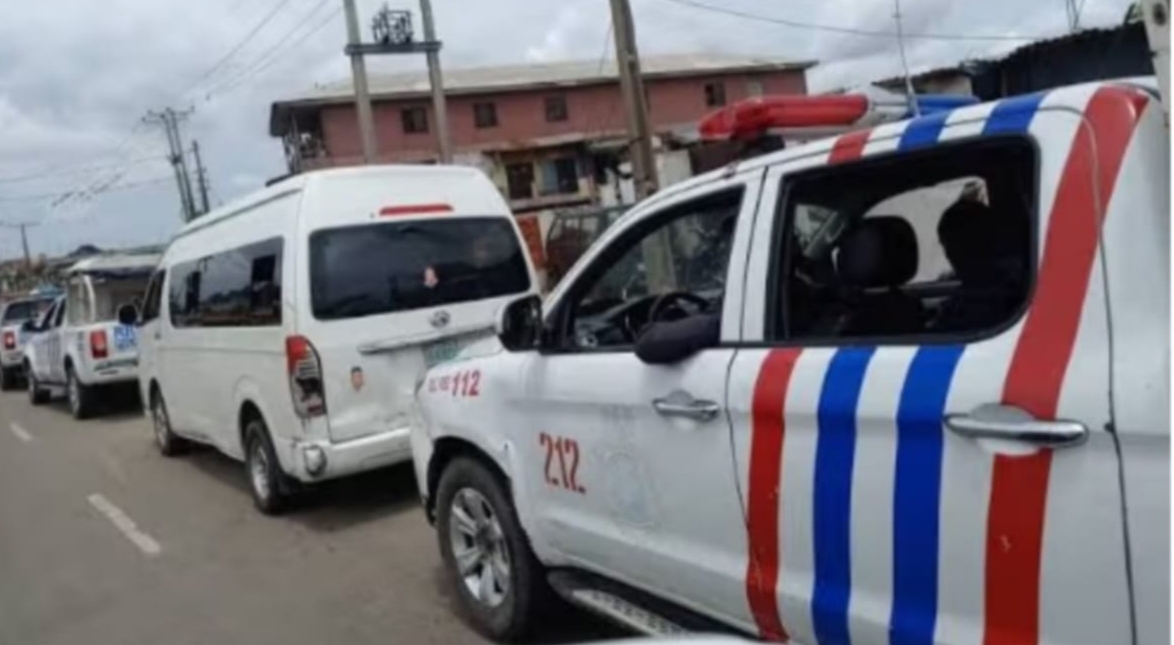
RRS patrol teams convoy
facebook sharing buttontwitter sharing buttonemail sharing buttonsharethis sharing button
Stay connected via Google News
Add as preferred source on Google
Imagine an ambulance trapped in Lagos traffic, its siren screaming as a patient fights for breath. Would we insist that it remain in the queue because the road ahead is a one-way street, or tell a fire engine to avoid the BRT lane while a building burns?
These are not hypothetical questions. They go to the heart of a recent incident involving officers of the Rapid Response Squad (RRS) of the Lagos State Police Command, whose patrol vehicle was captured driving against the direction of traffic in a viral video.
The footage triggered criticism, with some questioning why officers responsible for enforcing traffic regulations would appear to violate them. But what the camera captured was only part of the story.
According to the Lagos command, the officers in a vehicle marked RRS Attack 07 were responding to distress calls from motorists trapped in a traffic obstruction. Dispatched by the Command’s Control Room, the team was the closest available formation. Reaching the scene required navigating through the opposite lane to address the obstruction before it spread to adjoining roads.
The command cited regulation 158 of the National Road Traffic Regulations 2012, which permits law enforcement officers responding to emergencies or undertaking civil protection duties to disregard prescribed traffic signs, provided they exercise due regard for the safety of other road users.
Emergency privileges are not a licence for recklessness; they recognise that saving lives sometimes requires exceptions to ordinary traffic rules.
More troubling, however, was the confrontation that followed. An individual reportedly identified as an activist and social media content creator positioned himself in front of the police vehicle, obstructing its movement while recording the encounter.
Citizens have every right to question public officials. A democracy without scrutiny is a house without windows. But scrutiny must not become deliberate obstruction of officers carrying out legitimate operations.
A camera should document wrongdoing, not manufacture confrontation. What was the objective of blocking the vehicle? Was it to establish the facts or create another spectacle for online engagement? And what if the encounter had taken a more dangerous turn?
A volatile confrontation could easily have escalated, with potentially tragic consequences. That nobody was hurt is fortunate. But should public safety depend on the restraint of officers being deliberately pushed into an avoidable confrontation?
The RRS officers deserve commendation for their composure. Professionalism is not only about exercising authority but knowing when to restrain it.
In the UK and parts of the US, emergency vehicles are permitted to use restricted lanes and disregard certain traffic rules when responding to emergencies, subject to safety safeguards. Nigeria should adopt a similar approach, granting police vehicles, ambulances and fire engines authorised access to BRT corridors, one-way routes and other restricted roads when operationally necessary. What is the point of preserving a traffic restriction if it prevents responders from saving lives?
The incident also exposes a troubling culture of turning police officers into unwilling performers in social media skits.
Olatunji Rilwan Disu, the inspector-general of police, has previously cautioned against using police personnel as props for skits and viral content. His concern is well founded. Deliberately provoking an officer, recording the reaction and packaging the confrontation as entertainment is neither responsible activism nor meaningful public accountability.
Where officers abuse their powers, they must answer for their actions. But accountability must not become humiliation, and freedom of expression must not be stretched into a licence to obstruct legitimate police operations.
The consequences extend beyond an embarrassing video. Repeatedly baiting, ridiculing and undermining officers can erode morale and weaken public confidence in an institution carrying enormous national responsibilities. These are the same men and women expected to confront insurgency, terrorism, banditry, kidnapping and other violent crimes threatening our communities and national sovereignty. They are not expendable characters in social media skits but human beings entrusted with protecting millions of Nigerians, often under difficult and dangerous conditions.
Can we demand courage from officers confronting armed criminals while celebrating a culture that ridicules their uniform? Can we expect sacrifice from those protecting our communities while making their work unnecessarily difficult?
The Lagos command’s eventual clarification was necessary, although it came after the video had gained considerable traction. But the police and traffic authorities must go further by educating the public on emergency road access and the responsibilities of citizens when responders are on duty.
The rule of law is not weakened when authorised emergency responders make necessary exceptions. It is weakened when regulations are applied without regard for the lives they are designed to protect.
When emergencies arise, the road must never become a barrier between those who need help and those sent to provide it. Sometimes, saving lives requires more than enforcing the rules; it requires understanding why they exist in the first place.
Lanre Olagunju wrote in from Abuja
