 PH Mundial – Port Harcourt Online Newspaper News across the Niger Delta

Related Articles



By Nemi Tamuno
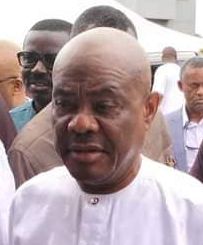
Rivers State is once again the theatre of elite realignment, this time under a banner the Minister of the Federal Capital Territory, Nyesom Wike, has christened the “Rainbow Coalition.” Announced during a thank-you tour of the riverine communities, the coalition is described by Wike as a “Renewed Hope Family” cutting across party lines to pursue one overriding objective: the re-election of President Bola Ahmed Tinubu in 2027. In practice, it is a cross-party political alliance spearheaded by Wike, bringing together chieftains of the Peoples Democratic Party, the All Progressives Congress, Labour Party and Action Alliance under one umbrella. Wike himself has been blunt about its purpose beyond Tinubu: the Rainbow Coalition will “collectively determine who becomes the next governor of Rivers State” and intends to “control all elective positions”. d147f1db53eb
The formation is not merely electoral. It is an exercise in elite theory, where a small, resource-rich political class seeks to monopolize access to state power by subsuming institutional party structures under personal leadership. Wike declared there was “no party allegiance in the state” anymore, only the coalition in pursuit of a common cause. That claim has been rejected by the Inter-Party Advisory Council, which insists parties are independent and cannot be spoken for by any individual. Yet the symbolism matters in Rivers, where the historic upland-riverine dichotomy has long shaped patronage. Wike’s tour has deliberately moved through both upland LGAs and riverine strongholds like Andoni, Asari-Toru, Akuku-Toru and Degema, signaling an attempt to paper over that divide with a patronage network anchored to federal power rather than ethnic geography. d1477dd8ac6f
Governor Siminalayi Fubara’s position within this new order reveals how incapacitated the office has become. After a protracted feud that saw lawmakers loyal to Wike pursue impeachment and eventually a six-month state of emergency, Fubara has executed a dramatic realignment. In August 2026 he received the Wike-backed reconciliation committee led by Magnus Abe, and days later declared publicly: “The time of war is over; it is now time for peace”. He announced support for Tinubu, for the Rainbow Coalition, and crucially for APC chieftain Kingsley Chinda as the coalition’s preferred governorship candidate in 2027. “I have returned to our family,” he told supporters, effectively ceding leadership of the state’s political machinery to the very structure that displaced him. 3bd23dc8f317
Wike has left no ambiguity about Fubara’s prospects. In Asari-Toru he stated that “as for the one of Rivers State that we did in 2023, we are not doing again,” a clear rejection of a second term for Fubara. Having earlier described Fubara in unflattering terms, the minister is now offering him survival only on condition of total subservience. For Fubara, the opportunity is narrow but real: remain relevant as a reconciler and Tinubu loyalist, deliver visible projects like the Riven Medical Facility he flagged off, and hope that goodwill translates into influence rather than outright retirement. The alternative is political oblivion once the coalition chooses its flagbearer. ac6f3dc8
Whether Rivers people benefit remains doubtful. The coalition promises stability and a united front to attract federal projects under Tinubu, and Fubara has framed peace as the path “to another level” of development. But the model centralizes decision-making in an extra-party body rather than in statutory institutions. Development indices in Rivers presently reflect that tension: oil revenue remains high, but infrastructure, healthcare and youth employment are still uneven, especially between riverine communities long neglected and upland urban centers. A coalition driven by elite accommodation risks prioritizing power consolidation over service delivery, unless it is forced to be accountable. 3dc8
There is also a cynical undertone. By inviting Fubara “back to the family” while simultaneously anointing Chinda, the coalition neutralizes a sitting governor and converts him into a campaign asset without guaranteeing him a future. It is a classic elite maneuver: absorb the opponent, strip him of independent base, and present unity as inevitability. Wike’s insistence that “if you want to be governor, come here” is both invitation and threat. f1db
That creates an opening for the opposition. IPAC has already rejected the coalition narrative as “misleading and unfounded”, and notes that some parties are independently considering unconditional support for Fubara to promote peace, even to the point of not fielding governorship candidates. If Fubara’s loyalists and other dissenting groups refuse to dissolve into the Rainbow, Rivers could see a genuine contest in 2027 between a Wike-Tinubu bloc and a coalition of the displaced. The danger for the opposition is fragmentation; the opportunity is to present themselves as defenders of party autonomy and local governance against what they call a personal empire. d1470cb5
In the end, the Rainbow Coalition is less about rainbows than about control. It seeks to hold Rivers State hostage to a single national project in 2027, using elite consensus to override party, region and incumbency. Whether it delivers peace with development, or peace with subjugation, will depend on how much space Rivers people and institutions are allowed outside the family Wike has built.
Dr Tamuno sent in this piece from Port Harcourt