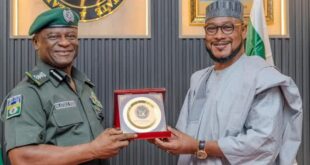
By Paul Williams Inspector‑General of Police Olatunji Rilwan Disu has called on Nigerian youths to shun political violence, digital thuggery and misinformation while embracing leadership, innovation and responsible citizenship. A statement by Force Public Relations Officer CSP Ani Iniedu said the IGP made the call on Thursday, 20 August 2026, while speaking at the three‑day National Youth Leadership and Security Dialogue in Abuja. The programme, which ran from 20 to 22 August 2026 under the theme “Different Contents, Common Aspiration”, was organised to commemorate International Youth Day 2026 as part of the National Youth Security and Peacebuilding Initiative. Designed to promote youth inclusion, peacebuilding, innovation and responsible citizenship, the event brought together youth leaders, government representatives, civil society and security stakeholders to discuss national security, digital responsibility, civic participation, entrepreneurship, cybersecurity, innovation and mental health. Disu urged young Nigerians to reject political violence, criminal manipulation and digital thuggery, stressing that no political ambition is worth the future of any Nigerian youth. He charged them to choose peace, leadership, innovation and responsible citizenship over violence, hate, misinformation and other forms of destructive conduct. The IGP reaffirmed the Nigeria Police Force’s commitment to protecting democratic participation, securing communities and partnering with young people and relevant stakeholders to build a safer, more peaceful society. He said the dialogue provides a platform for youths to contribute meaningfully to national development and democratic stability. Disu further expressed confidence that the three‑day engagement will produce practical outcomes that strengthen youth participation, community safety and national peace. The programme drew participation from government representatives, development partners, youth leaders, the Police Officers’ Wives Association, the Police Community Relations Committee, civil society groups and other stakeholders. Day One focused on youth leadership, security and national development, with sessions on national security, digital responsibility, civic participation, entrepreneurship, cybersecurity, innovation and mental health.
Read More »2027: Gov Diri Flags Off Tinubu’s Re-election Bid in Bayelsa, Tasks Politicians on Issue-based Campaigns
… Congratulates Osun’s Adeleke on Electoral Victory By Amos Odhe, Yenegoa Governor of Bayelsa State, Senator Douye Diri, has advised politicians to respect their opponents and ensure that campaigns for the 2027 general election were issue based. Speaking on Wednesday during the 195th State Executive Council meeting in Government House …
Read More »Lions Club Int’l To Empower Over 18,700 Nigerian Youths, Unveils Activities For New Service Year
.As District 404A2 Presents New District Governor, Aigbedion In Rivers By Our Correspondent Lions Clubs International District 404A2 has unveiled plans to empower over 18,700 young Nigerians as part of its humanitarian activities for the 2026 service year. The District Governor, Lion Engr. Edward Aigbedion disclosed this while briefing journalists …
Read More »NDDC Backs 3-Year Plan To Transform Bonny Kingdom Into Premier Tourism Hub
By Emma Sunday The Niger Delta Development Commission, NDDC, has pledged support for a three-year strategic programme to transform Bonny Kingdom in Rivers State into a globally competitive tourism destination. Addressing stakeholders during the Bonny Island Tourism and Investment Summit on Friday, the NDDC Managing Director, Dr Samuel Ogbuku, said …
Read More »Lifting of USCG Condition of Entry, A Call for Maritime Correction – PC-NCG
The Provisional Committee of the Proposed Nigerian Coast Guard (PC-NCG) has welcomed the lifting of the United States Coast Guard’s Condition of Entry on vessels arriving from Nigeria, but cautions that the development should trigger national reflection, not celebration. In a statement signed by its Director of Communication & Public …
Read More »Bayelsa Deputy Gov Akpe Advocates Preservation Of Ijaw Cultural Heritage
By Amos Odhe The Deputy Governor of Bayelsa State, Dr. Peter Akpe, has called on the people of the state to preserve the rich cultural heritage of the Ijaw nation and resist its adulteration through the importation of alien practices. Dr Akpe made the call in Yenagoa at the weekend, …
Read More »Bayelsa Elders Council Gets New Leadership As Gov Diri Tasks BSEC On Political Neutrality
A former Special Adviser to the Bayelsa State Government on Security Matters, High Chief Boma Spero-Jack, has emerged as the new Chairman of the Bayelsa State Elders Council (BSEC). Spero-Jack was elected on Monday in Yenagoa alongside other members of the Executive Committee, including Prof. Alison Oguru as Vice Chairman; …
Read More »North-West: IGP Disu Calls for Coordinated Response to Regional Insecurity
By Paul Williams The Inspector-General of Police, IGP Olatunji Rilwan Disu, has called for for an intelligence-led, community-supported, and coordinated regional response to insecurity. He was speaking at the North-West Security Summit in Gusau, Zamfara State on Wednesday, August 19, 2026. A statement by Force Public Relations Officer, CSP Ani …
Read More »ICCON Deepens National Assembly Engagement, Receives Support for Regulatory Reforms
By Paul Williams The House of Representatives Committee on Public Procurement has assured the Institute of Chartered Chemists of Nigeria (ICCON) of its support as the institute intensifies efforts to strengthen its regulatory capacity and reposition the Chemistry profession. This was as the Institute sustained its engagement with the National …
Read More »Oil Divestments Shortchange Niger Delta Communities, Threaten HRDs ~ AfriLaw
By Paul Williams Recent onshore divestments by oil multinationals are shortchanging host communities in the Niger Delta and increasing risks for human rights defenders (HRDs) operating in the region. This was part of the highlights at the “Extractive Host Communities and Human Rights Defenders Training Workshop” organised by the African Law Foundation (AfriLaw) in Port Harcourt on Thursday. The one-day session was organised in partnership with the National Human Rights Commission (NHRC), Nigeria Working Group on the VPs (NWGPs) and Voluntary Principles Initiative (VPI), with funding support from the Zero Tolerance Initiative (ZTI) and True Cost Initiative (TCI), USA. It brought together community leaders, journalists and civil society actors from extractive host communities across the region, and urged proactive risk management and stronger remediation measures for communities and human rights defenders. AfriLaw’s Executive Director, Chinwike Okereke Esq., said, “Divestment is not automatic. It’s a process, and there’s a transfer of liabilities and assets. In all those processes, the Niger Delta communities were not even given the chance to have a say or contribute. The community was neglected.” Okereke described recent exits by Shell and other oil firms as “irresponsible” and criticised federal approval of deals that ignored legacy environmental damage and failed to secure remedies for affected people. He added, “For them to approve that without the interest of the communities is negligence of their duty.” Okereke urged federal agencies and the NHRC to press for remediation and compensation where corporate activities have caused environmental and social harm. “The people need justice, and justice is about remedy for the people,” he said. AfriLaw’s Executive Director noted that the programme combines legal awareness with practical guidance so frontline actors can reduce escalation during environmental and rights crises and pursue redress more effectively. He described the training as “vital to empower and promote the protection of human rights defenders in the extractive sector of Nigeria using the VPI and UNGPs guidance tools.” Okereke said Port Harcourt is the fifth stop in a nine-state programme, adding that the regional rollout will continue. He, however, stressed the need for consultative divestment processes, stronger mechanisms to ensure proper transfer of liabilities and company-funded remediation for legacy harms. He urged civil society, media and national institutions to work together so defenders can carry out their work without fear of reprisal. Executive Director of Access Africa for Rights and Development Initiative, Dr. David Vareba, warned that shrinking civic space and weak safeguards leave HRDs exposed to reprisals. Vareba said, “Those who suffer the outcomes of this civic space that is being shrunk are human rights defenders, because they are the ones who are out there to defend the rights of the common people.” He further cited oil spills, alleged land-grabbing and episodes of police brutality where defenders are often targeted after mobilising on behalf of communities. Vareba said that to change the narrative, trainers at the workshop introduced participants to the Voluntary Principles on Security and Human Rights, an international framework first issued in 2000, and emphasised practical skills such as risk analysis, stakeholder mapping, documentation and community engagement. He noted that “Human rights defenders ought to analyse risk ahead and then proactively resolve what will lead to those human rights violations,” while arguing that these defenders often operate reactively and can be manipulated through bribery of community leaders or capture of regulators if they lack tools to anticipate threats. NHRC’s Executive Secretary, Dr. Tony Ojukwu, described the workshop as a way to strengthen collaboration between defenders and state institutions and to make complaint mechanisms more accessible. Ojukwu, represented by NHRC’s Rivers State Coordinator, Chinwe Okoroji, told participants, “Your being here today reflects a shared dedication to strengthening collaboration, deepening accountability, and ensuring that the principles of human dignity, justice, and equality are upheld in our society.” He highlighted workshop sessions on who qualifies as a human rights defender, the UN Guiding Principles on Business and Human Rights (UNGPs), the Voluntary Principles on Security and Human Rights, and the NHRC’s complaint procedures. He stressed that “The training is aimed at strengthening the institutional capacity of individuals, actors, media, CSOs by equipping them with the right techniques of defending their rights, seeking redress on disputes relating to human rights violations.” He urged participants to use the commission’s channels to bring forward documented cases of environmental and social harm. One of the participants, Alice Onukwugha, commended AfriLaw for organising the training. She said it afforded participants the opportunity to understand the UNGPs and Voluntary Principles on Human Rights and Security and how to deploy these to protect human rights defenders.
Read More »

PH Mundial – Port Harcourt Online Newspaper News across the Niger Delta