 PH Mundial – Port Harcourt Online Newspaper News across the Niger Delta

Related Articles


•Trains 20 PWDs cluster leaders
By Emma Sunday
As part of efforts to intensify it’s advocacy on Disability Inclusive Governance (DIG), in Nigeria, The All-right Foundation (TAF) Africa, has trained 20 cluster leaders of Persons With Disabilities (PWDs) on state budgetary process and inclusive budgeting principles.
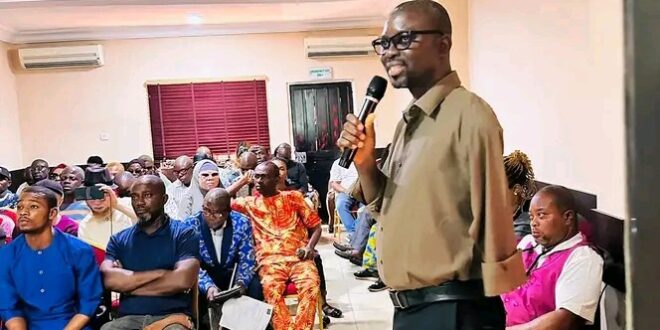
The leaders were trained during a capacity building workshop on disability-inclusive budgeting and budget analysis for disability cluster leaders in Rivers State.
Speaking during the workshop, Senior Programme Officer of TAF Africa, George Anwayi, said the workshop which is one of the activities in the Disability Rights Funded inclusive governance project in Rivers State, was aimed at equipping the participants with skills in disability-inclusive budget analysis to effectively engage government planning and programming processes.
Anwayi said the workshop was also aimed at strengthening the capacity of the PWD leaders to advocate for equitable budgetary allocations in line with Discrimination Against Persons with Disabilities (Prohibition) Act, 2018,and the Stakeholders Democracy Goals (SDGs).
In his paper presentation, Awaiyi emphasised on why PWDs should be fully involved in governance at the states and federal levels, and also be part of decision making bodies in governments.
He however, called on the Rivers State government and the House of Assembly to enact a law that prohibits discrimination against persons with disabilities (PWDs).
“Budget is very important. There is no governance without budget, and whatsoever you don’t budget for, you cannot implement it. Advocating for disability inclusive governance, and then the budget is a very important part of it. So, we want our disability community leaders in Rivers State to understand how the state budget works, understand the budget cycle and have the capacity to engage with government on disability inclusive governance.
“This workshop will empower them with skills and ability to engage the government and advocate properly for disability inclusion.
“We want to see disability inclusion in the processes, system, programmes and activities of government generally. We have be been on advocacy in Rivers State for disability inclusion and of course we cannot achieve that without laws, legal frameworks and other necessary foundations.
“We already have the Discrimination Against Persons With Disability Prohibition Act 2018. It is a national law and it will apply in various states including Rivers.
“And one of the things we are pursuing is to see that Rivers State have a state law that will fast track the implementation of discrimination against PWDs in the state. Currently there is a draft but it has not been passed into law.
“Thank God, the governor is back along side the House of Assembly. That is an exciting news for us, because we can’t do anything without the executive and the legislature. They have been in suspension for about six months now and that has stalled activities in the state.
“Their coming back is like a ‘Ray of light in the darkness’, we are hoping that the engagement processes will continue to see that the draft bill is passed at the Rivers State House of Assembly and then the Governor gets to sign it into law.
“With that law, we will be talking about implementation all the sectors including the health care, education and others.
Anwayi stressed that the DIG has legal frameworks and international supports. “Sustainable Development Goals (SDGs) has a ‘leave no one behind’ principle. SDG 4 ensures for inclusive and equitable quality education for all, including people with disabilities.”
“SDG I0, reduced inequality within and among countries, including by promoting the social, economic, and political inclusion of people with disabilities, while SDG 11 mandated that cities and human settlements be made inclusive, safe, and sustainable.
“Nigeria’s Constitution guarantees equality and dignity. Even the Discrimination Against Persons with Disabilities (Prohibition) Act, 2018, prohibits discrimination against PWDs in public and private sectors.
“The Act also mandates accessibility standards and requires reasonable accommodation and social protection measures for PWDs.
He disclosed that PWDs represents significant portion of Nigeria’s population, and that their inclusion in governance will strengthen democracy and social cohesion, while their exclusion will lead to inequitable service delivery and rights violations.
Some of the participants who spoke with our Correspondent after the event thanked TAF for the training and their advocacy for disability inclusive governance.
They called on the Rivers State government to promote the inclusion of PWDs in programmes and policies, they particularly appealed for an inclusive education where PWDs would be accommodated.