 PH Mundial – Port Harcourt Online Newspaper News across the Niger Delta

Related Articles

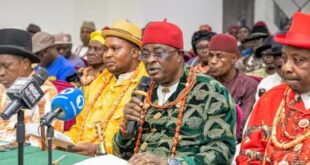
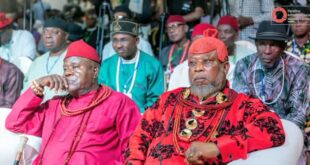
The Nigerian Liquefied Natural Gas (NLNG) has kicked off the Nigerian Content Human Capacity Development (NC-HCD) Basic Training Programme for its Train 7 Project, a major NC programme aimed at reskilling young graduates and developing human capital.
A total of 331 young graduates from diverse academic disciplines, who emerged successful out of 848 previously shortlisted from the Nigerian Oil and Gas Industry Content (NOGIC) Joint Qualification System (JQS) portal of the Nigerian Content Development and Monitoring Board (NCDMB), are undergoing the 12-month programme.
Areas of training include ICT, Engineering, Welding and Fabrication, Non-destructive Testing (NDT), Lifting and Working at Heights, Quality Management Systems, Marine and Offshore Services, and Facility Management and Maintenance.
In an address at the event, on Tuesday, in Port Harcourt, Rivers State, the NLNG Train 7 Corporate Liaison Manager, Engr. Joshua Anemeje, said the execution of the project has progressed remarkably well and attributed the successful commencement of the NC-HCD Training Programme to the support of the NCDMB.
“We are excited to see the number of young men and women this programme will impact. NLNG takes pride in empowering our people, providing an environment that builds skills and capabilities. As you know, the Train 7 Project is nearly 75% complete, employing over 10,000 skilled individuals on-site. This training offers participants a chance to make the most of their learning and apply it in future endeavours,” he said.
Engr Anemeje disclosed that there are over 10,000 workers actively engaged in the construction of the Train 7 Project at the NLNG Plant Site at Finima, Bonny Island, Rivers State. He charged the trainees to stay focused and work towards utilising the skills they acquire for future endeavours.
In a keynote address, the NCDMB Executive Secretary, Engr Felix Ogbe, FNSE, represented by the Director of Capacity Building and Corporate Services, Dr Ama Ikuru, expressed joy that the training programme had finally taken off in fulfilment of the Nigerian Oil and Gas Industry Content Development (NOGICD) Act requirement on human capital development.
He said the programme, designed to build a pool of skilled and globally competitive workers to support the development and growth of the Nigerian oil and gas industry and its related sectors, represents a crucial investment in our country’s future and remains a commitment to the empowerment of the next generation of skilled professionals.
Addressing the trainees, Dr. Ikuru stated that the opportunity created by the NC-HCD programme will enable them to build a strong foundation in both knowledge and practical skills. He remarked that there was a clear pathway to employment for high-performing trainees.
He further remarked that young graduates seeking to benefit from similar training for oil and gas industry-related jobs can register on the NCDMB’s NOGIC JQS Portal, which is the statutorily established database for companies operating and providing services in the sector.
The training is provided by the Oil and Gas Trainers Association of Nigeria (OGTAN).
The Train 7 Project is expected to increase the production capacity of the NLNG terminal by 35 per cent, from the current 22 million metric tonnes per annum (mtpa) to 30 mtpa.