 PH Mundial – Port Harcourt Online Newspaper News across the Niger Delta

Related Articles



By Amos Odhe, Yenagoa
Some environmentalists on Wednesday demanded further action on the Bayelsa Oil and Environmental Commission (BSOEC) report presented to Gov Douye Diri of Bayelsa at House of Lords on Tuesday in London.
The report titled: ‘An Environmental Genocide: Counting the Human Cost of Oil in Bayelsa, Nigeria,’ captured over 60 years of oil exploration and pollution.
The BSOEC, established in March 2019 by the immediate past administration, led by Sen Seriake Dickson, said abnormally high concentrations of toxic heavy metals were found in soil, waters in Bayelsa oil communities.
The report, which attributed the massive pollutions to activities of oil and gas exploration and production by oil firms recommended a remediation fund of $12 billion over a 12 year period.
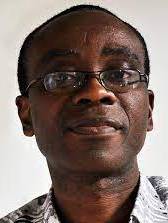
Dr Nninmo Bassey, executive director, Health of Mother Earth Foundation (HOMEF), an environment-focused non-governmental organisation urged the Bayelsa government to go beyond receiving the report.
Bassey, a renowned rights activist who hold the national honours of Member of Order of Federal Republic (MFR), for environmental activism, noted that it was obvious that Bayelsa was highly polluted with high toxicity levels begging for remediation
“The horrific degradation of the Niger Delta is undeniable as it is open and in plain sight.
“Considering how slow the Federal Government has been to make a decision for an assessment of the entire Niger Delta environment, we must applaud the Bayelsa State government for establishing the commission.
“Having the report is good, particularly for Bayelsa State because the state is arguably the most dastardly polluted in Nigeria. But having the report is one thing. The question is, after the report confirms the obvious, what will be the next steps.
“That is what we want to hear from the Bayelsa State government, from the Federal Government and from the polluting oil companies,” Bassey said.
Also, Mr Alagoa Morris, a renowned environmentalist welcomed the report.
Although Dickson came up with the setting up of the commission from a very selfish disposition, it is nice that a special investigation and report relating to oil industry induced pollution is becoming a reality; specifically for Bayelsa State.
“We are not too excited about it because the UNEP report on Ogoni has informed Niger Deltans, Nigeria and the world about how the negative impacts of crude oil could be on the environment, livelihood, health and well-being of the people.
“The situation is not expected to be much different, just that the case of Bayelsa would be on a higher scale as per scope of pollution. While that of Ogoni is just about Shell, in Bayelsa we should be looking at the combined pollution caused by Shell, Agip, Cheron, Conoil, etc.
“This is more so, as in 2014 NOSDRA made public that Bayelsa was most polluted,” Morris said.
He explained that while much of the impacted areas in Ogoni are salt water environment, it is like 50/50 for salt water and fresh water environment in Bayelsa that have suffered many years of oil spills;
According to him, there are still so many impacted sites which have never been cleaned and remediated or just an attempt made.
He said the Taylor Creek, Kolo Creek, Ikebiri Creek, Apoi Creek, Ossiama Creek, Nun River, and Silver River are all fresh water flowing bodies of water that have been polluted by crude oil from Shell and Agip again and again.
“Incidentally, because of government’s neglect, communities settling along these rivers and Creeks resort to them for drinking, bathing, washing clothes and kitchen utensils, fermentation of cassava for fufu, etc. So, our people would suffer much more health implications, as the water soluble part of crude oil are even more dangerous,” Morris said.
He advocated effective cleanup and remediation of all impacted sites like ongoing UNEP recommended cleanup in Ogoni and, compensation for pending cases of equipment failure incidents.
“It won’t be out of place to also have recommendations for our communities to be given portable water and better access to good health facilities plus world class laboratory in Bayelsa State to enable easy testing of materials from impacted sites,” Morris said.