COVID-19: Bayelsa Governor Tests Negative

By Amos Okioma,Yenagoa

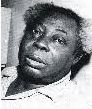
Bayelsa State Governor, Senator Douye Diri, has tested negative for the coronavirus, COVID-19, putting to rest the speculations and anxiety over his health status.

The governor’s acting chief press secretary, Mr. Daniel Alabrah, said in a press release that the test result was obtained on Thursday from the Nigeria Centre for Disease Control (NCDC)-accredited laboratory at the Irrua Specialist Teaching Hospital in Edo State.

“The result showed that Governor Douye Diri had no evidence of COVID-19 infection,” he said.

Officials of the epidemiology unit of the state Ministry of Health, led by the state epidemiologist, Ifiemi Iwuji, had on Wednesday conducted the test and the samples sent to the Irrua Specialist Hospital.

Before the governor opted for the test, he had been inundated with phone calls and messages following speculations on the social media that he might have been infected. This was fuelled by his sitting next to a North East state governor, who later tested positive for the virus, during the last National Economic Council (NEC) meeting at the State House, Abuja, on March 19.

The information about the governor’s clean bill of health threw excited Bayelsans into jubilation with some describing it as yet another miracle for the man who has been christened the ‘Miracle Governor.’

On his part, Governor Diri expressed appreciation to Nigerians and Bayelsans for their concern, love and good wishes toward him and his family.

He also prayed for a reversal and healing for all those that had been infected by the pandemic.

His words: “I had to take the test so as to douse the tension and end all the speculation. Besides, I needed to know my status concerning the COVID-19. I am therefore thankful to God that the result was negative as I anticipated. 

“I also thank Nigerians and Bayelsans all over the world for their concern, love and prayers. I pray for everyone that has been infected by this disease to be healed.”

Governor Diri said his administration would continue to take the appropriate measures to prevent the spread of the disease in the state.

As part of these measures, civil servants on Grade Level 1 to 12 have been directed to stay at home for two weeks with effect from March 26 just as all public and private primary and secondary schools in the state have been shut down.

The state government had also suspended for two weeks burial and wedding ceremonies while the number of persons at worship centres and public gatherings has been reduced to not more than 20. The restriction order also affected night clubs and drinking bars in the state.

Share Post on

Check Also

Make Methane Reduction a Business Priority, NLNG’s Falade urges Gas Industry

... Says Monetisation Initiative Cut Nigeria’s Gas Flaring from 65% to 20%  By Paul Williams   NLNG has urged the global gas industry to make methane reduction a business priority, adding that every tonne of methane released into the atmosphere represents lost revenue and gas that could otherwise reach the market.  The company said its experience shows that investment in reducing these losses can pay for itself while cutting emissions and improving plant efficiency.  Managing Director and Chief Executive Officer of NLNG, Mr Adeleye Falade, made the call at Gastech 2026 Exhibition and Conference in Bangkok during a panel titled “Capturing the Lost Opportunity: Driving Global Alignment on Methane Abatement Across Natural Gas Supply Chains.”  He said the NLNG approach starts with measuring methane losses and using the findings to guide investment in leak prevention and gas recovery, with independent verification to ensure credible reporting.  Falade said the industry needed to shift the conversation from the cost of methane reduction to the value it creates, recognising that preventing gas losses serves both commercial and environmental objectives.  “Every tonne emitted is lost product, lost revenue and lost energy; gas we could have sold. Every molecule of methane avoided is both an emissions reduction and a recovered energy resource,” he said.  He cited NLNG’s new boil-off gas compressor and start-up gas recovery project as examples of investments that support this approach. Each project targets methane reductions of approximately 10–15 per cent, and both have positive projected net present values, meaning their anticipated financial benefits exceed their costs over the life of the projects.  Falade said, “The most compelling business case is the simplest one: the projects that cut our methane also pay for themselves. The same discipline that reduces methane also improves asset reliability and plant efficiency. The returns show up in more places than the emissions ledger.”  He explained that credible measurement underpins NLNG’s investment decisions, which allows the company to identify methane losses, direct resources to the right interventions and assess the results.  He noted that NLNG’s experience demonstrates that gas producers in developing economies can establish globally trusted emissions-reporting systems by investing in monitoring infrastructure, building reporting capabilities and submitting their data to independent scrutiny.  Falade highlighted NLNG’s Gold Standard recognition under the Oil and Gas Methane Partnership (OGMP) 2.0 and said the company was the first in Africa to achieve Level 5 methane emissions reporting.  He added that its measurement, reporting and verification (MRV) system is independently assured by DNV in accordance with ISO 14064.  NLNG’s approach includes site-wide optical gas imaging, a structured Leak Detection and Repair programme, and the phased deployment of continuous monitoring and real-time dashboards across its plant and vessels.  …

Leave a Reply

Your email address will not be published. Required fields are marked *