 PH Mundial – Port Harcourt Online Newspaper News across the Niger Delta

Related Articles


By: Mandy Tina
Stakeholders at the 3rd Annual Niger Delta Climate Change Conference have called on the federal government to establish dedicated climate change ministries at both the state and local government levels to effectively tackle the region’s worsening environmental crises.
The call was led by Friday Barilule Nbani, Director of Lekeh Development Foundation and convener of the conference, who urged the decentralization of Nigeria’s climate change response structure.
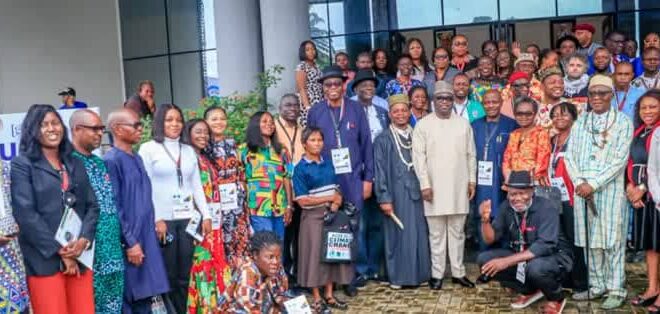
The event, organized by the Leadership Initiative for Transformation (LEDEF), brought together environmental activists, legal experts, civil society leaders, and impacted community representatives in Port Harcourt.
“We have the National Council on Climate Change, but it must go beyond Abuja,” Nbani said. “We need state and local government climate change desks to capture the realities on the ground, especially in the rural communities where degradation is severe and undocumented.”
He lamented that local farmers and fishermen have been rendered helpless due to environmental degradation caused by oil extraction.
“Communities are in crisis. Our people cannot farm or fish anymore. This is why we must build solidarity and unity to make our voices heard at the national and global levels including COP30 in Brazil this November.
“We have many undocumented stories around local Communities especially in the area of environmental impact and degradation, our communities have been degraded farmers cannot farm anymore, fishermen can not fish. A lot of sorry situation as regards to environment we can not keep silent.
“We are united critical Niger Delta stakeholders people ensuring this kind of discussion take a centre position in the communities. We have to build that solidarity, movement, peace, love and harmony.”
In his keynote address, Ken Henshaw, Executive Director of We the People, called for an urgent and just transition away from fossil fuels. He blamed multinational oil corporations for the region’s environmental ruin and criticized the government’s economic dependence on crude oil.
“Nigeria must recognize that it contributes to the climate crisis not just through extraction but by refusing to break free from fossil fuel dependence. We need an economy that is not tied to oil and gas. Communities need direct support and protection from climate-related disasters.”
Henshaw emphasized the need to uphold the rights of vulnerable populations and ensure they are included in decision-making. “Those who have profited from oil must be held accountable for the devastation they’ve left behind,” he said.
Adding a legal perspective, Anthony Hayward of Leigh Day Solicitors, who represents several Niger Delta communities including Bille, Ogale, Bodo, and Gokana in lawsuits against Shell PLC and Renaissance, commended the resilience of affected communities in seeking justice through the courts.
“The people of the Niger Delta have shown remarkable courage. Litigation may be costly and time-consuming, but it remains the most effective path to justice. Since Shell discovered oil in 1956, their operations have been marked by environmental neglect and impunity.”
He recalled victories secured for some communities, including the ₦55 million compensation awarded in 2014, as proof that legal action, supported by civil society organizations, can yield results.
He stressed the importance of awareness, participation, and continuous dialogue through conferences like this.
The conference ended with a unified call for: The decentralization of Nigeria’s climate governance structure, Reparations for oil-producing communities, An end to gas flaring and fossil fuel dependency. Renewable energy investments controlled by communities, Legal and civil action against polluters, Niger Delta representation at COP30 in Brazil
The annual Niger Delta Climate Change Conference continues to serve as a vital forum for regional advocacy and strategy, as the region confronts some of the most severe climate and environmental challenges in the world.