 PH Mundial – Port Harcourt Online Newspaper News across the Niger Delta

Related Articles
By Paul Williams
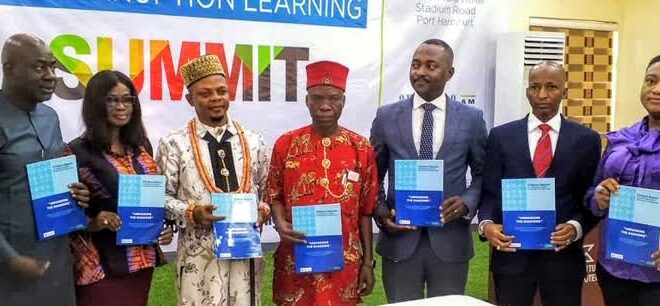
Non-governmental organisation Social Development Integrated Centre (Social Action) has unveiled a citizens’ report tracking the status of publicly funded constituency projects in selected states of the Niger Delta.
The report, ‘Unmasking the Shadows: Constituency Projects in the Niger Delta – A Critical Assessment of Transparency Accountability and Impact,’ tracks the impact of corruption on the development process, and is part of a push by Social Action, with support from MacArthur Foundation, to build ‘Stakeholders Resilence for Sustained Accountability and Development in the Niger Delta.’
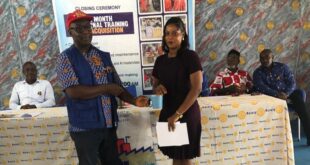
It was unveiled in Port Harcourt on Tuesday, at an anti-corruption summit, which explored the role of citizens in accountability process in the Niger Delta, and had in attendance representatives of government agencies, civil society actors, media, students and community members from the nine states of the region, namely: Rivers, Edo, Imo, Abia, Bayelsa, Akwa Ibom, Ondo and Delta.
Executive Director of Social Action, Dr. Isaac Osuoka, in his address, said the summit “is a continuation of the efforts to fight against the scourge of corruption and chart a new course for accountability.”
He traced the incidence of corruption and environmental degradation in the Niger Delta to what he described as contempt for the citizens by those in positions of authority.
“We know that throughout the global, oil and gas (production) is problematic. But in particular the Niger Delta expresses a situation that shows the level of contempt that the state has for people.
“We see here that people are not citizens but treated as subjects and this has been the case right from the days when the British established this colonial territory.
“People all over the country, not just in the Niger Delta, are still treated as colonial subjects, without rights without privileges of citizenship.
“And the environmental devastation in the Niger Delta is a clear demonstration of that. Part of the challenge is corruption. The idea that those who occupy political offices can use or consider the resources of states as private ATMs.
“When you have that sense of irresponsibility, then it becomes difficult to address even issues of environmental degradation because those that are in power do not feel that they hold any responsibility to those that are supposed to be serving,” Dr Osuoka said.
Social Action’s Programme coordinator, Isaac Botti, said the report and summit highlights the need for greater accountability and transparency in resource management for sustainable development of the Niger Delta region.
“Despite its rich natural resources, the region suffers from environmental degradation, poverty, and corruption. The report outlines issues such as poor oversight, budget secrecy, abandoned projects, and financial mismanagement.
“It recommends reforms, including proper supervision, stakeholder engagement, consolidation of bank accounts, and publication of forensic audit reports.
“Strengthening governance, transparency, and monitoring mechanisms is essential to ensure effective resource utilization and improve local communities’ well-being,” Botti said.
Representative of the Economic and Financial Crimes Commission (EFCC), Mr Elijah Karam Bakam, commened Social Action for choosing to follow “a path that is not so well-traveled.”
He said accountability is a path not well-traveled “because corruption, in its very endemic nature, has employed a lot of Nigerians and persons all over.
“Corruption has more supporters than the people who are untied to it in their behavioral patterns, in their networks, in their speech, in their conduct.”
Bakam pointed out the need to fight this cancer that has made Nigeria the country that Susan Rice once described as too rich to be poor, and too poor to be rich.
He however noted that citizen’s response to the fight against corruption seems rather low.
“You would find a graphic example of this in the rise of cyber crimes in the Niger Delta and in Nigeria. We now have gatherings of parents who ordinarily should ask (their children) how come you have a car?
“This gathering gives us a lot of opportunity to come away from hypocrisy in the fight against corruption. To look at the areas that we have failed, the areas that we can do better,” he said.
Representative of the Independent Corrupt Practices and Other Related Offences Commission (ICPC), Mrs Ekere Usiere, said the commission is “very passionate in the fight against corruption.
“Before corruption kills us, we need to kill corruption. We have system that tracks constituency projects. Let us start changing the way we look at things. Projects assigned to our communities are our projects,” she said.
In a paper on “Sustaining Collaboration for Inclusive Development and Public Accountability in the Niger Delta,’ Associate Professor Etim Frank, of the Department of Public Administration at the University of Uyo, stressed the historical marginalization of the oil-rich region.
“We are here because of our resource is not working for us. Nigeria has become the poverty capital of the world and poverty in Niger Delta is taking another dimension We are here to look at future of our children when the oil is no longer there.”
He described corruption as “Arrested Development,” while pointing out the various forms of state and political capture that has been enabled through corruption.
“Corruption is hydraheaded in Niger Delta. No House of Assembly is able to check excesses of the executive in Niger Delta. The crude oil in Niger Delta must dry up no matter how will pray. So we must use our resources to secure our future before the oil dries up” he said.
A panel discussion on ‘Utilizing Beneficial Ownership as a Tool for Promoting Accountability’ explored issues of Beneficial ownership, corruption and social development.
The panelists were Dr. Muhammad Abdullah from the Corporate Affairs Commission, Dr. Kelechi Justine, and Dr. Tijan Bolton of Policy Alert.