 PH Mundial – Port Harcourt Online Newspaper News across the Niger Delta

Related Articles
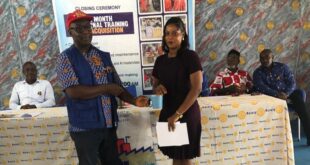
By Paul Williams
Ghana’s Minister of State for Climate Change and Sustainability, Seidu Issifu, has called for collaboration across African states, aimed at achieving climate resilience, diplomacy and debt forgiveness.
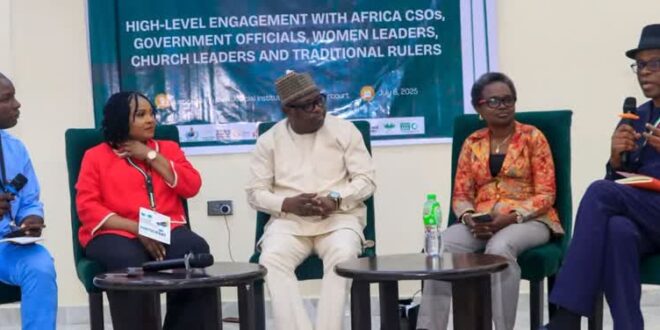
Issifu made the call the at 3rd Annual Niger Delta Climate Change Conference, with the theme: ‘Building A Resilient Future, Integrated Climate Action and Community Empowerment in the Niger Delta,’ held in Port Harcourt, the Rivers State capital, on July 8, 2025.
The event was organised by the Lekeh Development Foundation (LEDEF), in collaboration with Kebetkache Women Development and Resource Centre, Health of Mother Earth Foundation (HOMEF) and other groups.
Ghana’s minister for climate, Issifu, said Africa bears the brunt of the global climate crisis, but can only achieve meaningful progress in addressing this situation through collaboration and forging a common front
The minister who was appointed to the position by President John Dramani Mahama to spearhead Ghana’s climate agenda and sustainability efforts, stressed the need for the continent to build what he described as African climate diplomacy towards achieving climate resilience and climate debt forgiveness.
Issifu, who is also the Member of Parliament for the Nalerigu/Gambaga Constituency in the North East Region, said African collaboration should start at the sub-regional level, such as between Nigeria and Ghana, adding that he was at the climate conference in Port Harcourt as a way of deepening climate diplomacy in the region.
“I advise the President on issues related to climate matters. I have said that there are dots between Ghana and Nigeria, and for that matter, the sub-region. So what do we do to cross these dots?
“We have to deepen climate diplomacy. And by deepening the diplomacy, we’ll make sure that we synergize, ensure that best practice is attended to
“We have one common problem as Africans. We have one destiny. We need a synergized solution to be able to address the issues of climate and sustainability,” he said.
He described the building of climate resilience across the continent as a work in progress, adding that “poverty is an issue, sometimes lack of funding is an issue In Africa. We need to build our own financial resilience if we are to get climate justice.”
Issifu pointed out the impact of climate crisis on Africa, adding that “somebody sneezes somewhere and you get cold and you think that the person responsible has not committed an offense. That is not fair, and that is why I’m saying that we have to really come together and ensure that we champion the cause to have climate debt forgiveness.
“We need to come up with this mechanism and we have to be forgiving. Look at the kind of diseases that we have these days, kids are having blood pressure. Where is that coming from.
“Poverty and our inability to build our own resilience all those things would affect the SDGs so that’s why i’m saying that look let’s have a common voice African group of negotiators must have a common voice our politicians must have a common voice to champion for climate debt forgiveness,” he said.
Executive Director of Lekeh Development Foundation, Friday Nbani Barilule, pointed out LEDEF is a grassroots based advocacy organization that works with communities to address local and global challenges in a constructive manner.
He noted the impact of oil exploration on the Niger Delta, adding that it is time the region and Nigeria focus on renewables as an alternate source of energy.
Executive Director of Kebetkache Women Development and Resource Centre, Dr. Emem Okon, said climate change is a global issue. In the Niger Delta, we are at the front line because of the oil extraction activities going on,” adding that the women bear the greater burden of the climate change crisis
She called on governments at all levels in the country to adopt climate action frameworks, “which should be gender responsive, so that we can begin to address the impacts of climate change at the community level.
“When we talk about flooding, it is really affecting women, particularly rural women in the communities. And there has been no sustainable solution over the years. The state should adopt sustainable solutions and the local government also should be able to look at what actions can they take,” Dr. Okon said.
Executive Director of Health of Mother Earth Foundation (HOMEF), Rev. Nnimmo Bassey, spoke on what has been variously described as the Resource Trap, a situation where resource-rich countries are caught in a web of underdevelopment due to an inability to properly manage their resource.
He frowned at the fact that most African countries, such as Nigeria, Ghana and others, are being steadily caught in this trap, as he called for a rethink and healthier approach to environmental issues.