 PH Mundial – Port Harcourt Online Newspaper News across the Niger Delta


Related Articles

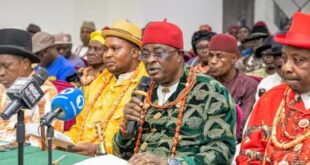
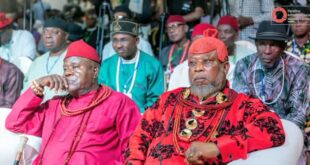
Former president of the Association of Nigeria Licence of Customs Agents (ANLCA), Chief Ernest Elochukwu, has lauded the Nigerian Shippers Council (NSC) over the launch of Port Process Manual, noting that the manual will address corruption in the Nigeria Customs and other agencies within the Nigeria port system.
Chief Elochukwu made the observation in an interview with journalists during the launch of the Nigeria Port Process Manual (NPPM) in Port Harcourt, the Rivers State capital.
He commended the push of Nigerian Shippers Council to finding solution to the challenges facing shippers and other maritime group in course of their trade.
He however faulted government for always playing to the gallery, by not complying with solutions that emerge from different workshops/seminars across the country in the past.
Chief Elochukwu queried the rational why more people want to be at the port, stating that this is not in line with global best practices. He observed that having more people and more agencies at the port only promotes corruption, and mitigate efficiency and professionalism in the maritime trade/activities.
The former ANLCA President urged FG to take a second look at the way they prohibit items for importation, stating that prohibiting essential commodities without corresponding local manufacturing, only promote corruption among members of the Nigerian Customs Service, and call for re – consideration.
Earlier, the executive secretary of the Nigeria Shippers Council, Barr Hassan Bello, described the Nigerian Port Process Manuel as apt, noting that it is the only way forward to close the huge gap between what is happening in Nigeria and what happens in developed maritime world across the globe.
Barr. Bello frowned at what he called “abysmal poor rating of transparency/corruption index indicators in Nigeria”, and said that the launching of the Nigerian Port Process Manual will help to address the corruption in the maritime sector of the country.
Managing director of the Nigeria Ports Authority (NPA), who was represented by the General Manager, Public Private Partnership (PPP), Mrs Eniola Williams noted the standard operating procedures (SOP), followed the same procedure just like NPPM.
The NPA CEO observed that NPA took the leading role in funding the steering committee which developed the NPPM document, stating that the manual contains detailed guidelines on Port procedures.
“We believe that the manual will improve operations across the Nigerian ports and instill the culture of efficiency and transparency among maritime industry players’’, NPA MD stated.
Among those who spoke at the event include Mrs Lilian Ekechukwu who introduced the Nigerian Port Process Manual (NPPM). She represented Technical Unit for Governance and Anti – Corruption Agency Reform (TUGAR).
Also present at the event includes port managers of Onne and Rivers Port, respectively. Some of the stakeholders at the event applauded Nigerian Shippers Council for their commitment to tackle corruption and to checkmate the excesses of customs service officials, others in areas of corruption and unnecessary delays of cargo movement.