 PH Mundial – Port Harcourt Online Newspaper News across the Niger Delta

Related Articles



By Lanre Olagunju
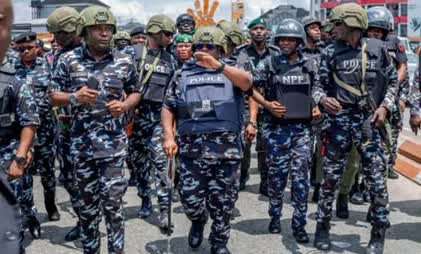
When the distress call came from Ayilamo, Logo Local Government Area of Benue State, the people on the other end knew what it meant. Armed men had invaded the community. Residents were under attack. The police responded. Officers from the Police Mobile Force, tactical teams and conventional units moved towards the danger and engaged the attackers for several hours before forcing them to retreat into the surrounding forest. By the time the shooting stopped, seven civilians and four police officers were dead.
The officers were identified as “ASP Paul Ina, Inspector Mohammed Yusuf, Inspector Oge Ikechukwu and Inspector Edeh Andrew”. Their bodies were later recovered from the surrounding bushes.
There is a tendency to read an incident like this through the cold language of security reporting: four officers killed, seven civilians killed, attackers repelled, suspects fled. The language is necessary, but it can also make terrible things sound ordinary. Four men left home for work and did not return. Somewhere, four families were waiting. Somewhere, children who knew their fathers as the men who went to work in uniform must now learn to understand that the uniform came back, but the man did not.
No one takes a job intending to be killed at work. Police officers are not recruited because they have somehow become less human or less afraid of death than the rest of us. They have rent to pay, children to raise, parents to support, spouses to love and plans for the future. They go to work to earn a living, just as most Nigerians do. The difference is that a policeman’s ordinary working day can suddenly place him between an armed attacker and the person who called for help.
When armed men enter a community, the natural human instinct is to move away from the gunfire. Families lock their doors. Parents pull their children inside. Residents hide wherever they can. People call relatives to find out whether they are safe. But somewhere on the road, a police vehicle is moving towards the danger because somebody has called for help.
Think about the sequence.
Someone was in danger. A call was made. The police came. And one of the people who came to save another person did not return home. This is not a dramatic movie plot. It is an increasingly familiar pattern in Nigeria’s security landscape.
Only days after the Ayilamo attack, two newly deployed Mobile Police officers were also killed in an ambush while escorting the Divisional Police Officer back to the community. The significance was difficult to miss. The security challenge remained, even after colleagues had already paid the highest price. And that is perhaps the part of policing the public sees least: the job does not stop when an officer dies.
A colleague can be buried today, and another officer will still put on his uniform tomorrow. The patrol vehicle will still move. The radio will still crackle. Another distress call will come. Another community will need protection. That is not an ordinary job.
This is not an argument for blind praise of the police. Nigerians have legitimate reasons to demand accountability from the institution. Cases of misconduct, brutality, corruption and abuse of authority must be confronted. A police uniform does not place anyone above the law. But like I say often, accountability and appreciation are not opposites.
A country can demand better policing while recognising the human cost paid by officers who confront violence. Indeed, we should be able to hold both truths at once: the civilian killed in an attack is not less important because he was not wearing a uniform, and the police officer killed while trying to protect that civilian is not less human because he was in uniform.
The Zamfara EOD tragedy offers another window into this reality.
In June, three police Explosive Ordnance Disposal officers, SP Abdulrazak Musa Hassan, Inspector Murtala Musa and Inspector Auwal Ahmad, were killed when an improvised explosive device detonated along the Anka-Bagega road during an operation to deal with a suspected explosive device planted by armed bandits.
Think about what that assignment requires. When most people hear that an explosive has been planted on a road, the instinct is to stay away. The EOD officer’s responsibility is to move closer. To examine what everyone else is afraid to approach. To determine the danger and make the road safe for people who may never know who made it safe.
The road is made safer because somebody is willing to walk towards what makes it dangerous.
That is the paradox at the heart of policing and national security. We often discuss security through budgets, weapons, intelligence and operational plans, but behind every strategy is a human being making a decision in circumstances where getting it wrong can mean death.
Sometimes that person is a police officer, and when that officer dies, the loss does not end with the funeral.
There may be school fees to pay, children to raise, a wife suddenly forced to reorganise an entire household, elderly parents who have lost a source of support. No condolence message can explain to a child why a father who left for work will never come home. No financial benefit can replace a husband or father.
That is why the welfare of fallen officers’ families cannot be treated as an afterthought. If the state expects an officer to place his life between an armed attacker and the public, it must also have a credible system for protecting the family he leaves behind.
But this conversation must remain balanced. In Ayilamo, civilians died alongside the officers. Across Nigeria, farmers, traders, students, travellers, children and families continue to bear the consequences of insecurity. The point is not to create a hierarchy of grief. It is to recognise all of it.
Whether Nigerians like the police or not, whether they trust every officer or not, and whether they believe the institution has always lived up to its responsibilities or not, one fact remains: members of the Nigeria Police Force are part of the machinery protecting communities and maintaining national security, and some of them are paying for that responsibility with their lives.
We should not glorify their deaths. We should make their deaths mean something.
That means better equipment, better intelligence, better training, better operational planning, better welfare and stronger support for the families left behind. It also means accountability, because a professional police force must be capable of protecting citizens while respecting their rights.
Perhaps, too, it means learning to see the person inside the uniform. The next time a distress call comes, somebody will answer it. Somebody will leave home. Somebody will drive towards the danger. Somebody’s family will wait for the sound of the gate opening again. For some officers, it will. For others, it will not.
Lanre Olagunju sent in this piece from Abuja