 PH Mundial – Port Harcourt Online Newspaper News across the Niger Delta

Related Articles

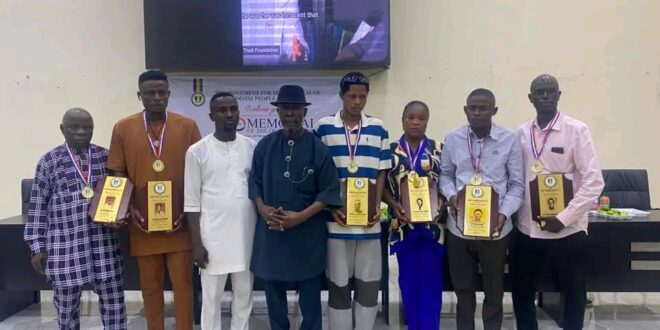
As the Ogoni Ethnic Nationality commemorates the 30 years of the killing of Ken Saro-Wiwa and eight other Ogoni elites by the General Sani Abacha military junta, and four prominent chiefs at Giokoo in Gokana Local Government area of Rivers State, the Movement for the Survival of Ogoni People, MOSOP, has called on the people to be united in the pursuit of their aspiration.
President of MOSOP, Professor Olu Andah Wai-Ogosu stated this at the a memorial lecture in honour of the Ogoni 13 held in Port Harcourt.
Wai-Ogosu said Ogonis should use the day to sober-reflect on the gains of the struggle and chart a new narrative going forward.
He noted that over 2000 persons lost their lives during the period leading to the death of the Ogoni 13 referred to as Ogoni martyrs.
“We lost over 2000 lives but 13 were very prominent sons of Ogoniland and there are some still living. Some with amputated arms, blind eyes, so we want to take this message back to them that the spirit is still alive.
“We must come together. We want to recalibrate our energies and so we need to speak with one voice as Ogonis and work together, ” he said.
The MOSOP president called on Ogoni elites to jettison selfish interest and work for the overall benefit of Ogoni while also challenging those in the diaspora ri bring their experience and knowledge back home.
He lamented the level of poverty in Ogoniland and called for a change in narrative.
Delivering a keynote address at the event, Monsignor Pius Kii suggested a presidential apology from the presidency to permanently heal the wounds created in the heart of Ogonis.
He said the call for presidential apology would also help resolve the controversial presidential pardon granted Saro-Wiwa and eight others.
“I proposed a presidential apology as a solution to the lingering issue of the Ogoni crisis because you cannot pardon a person that committed no crime.
” The apology is necessary because several actions and in actions of the federal government led to the sad turn of events in Ogoniland. This proposal is hinged on the critical roles that forgiveness plays in national growth and peace building, ” he added.
As part of the healing process for Ogoniland, Kii also called on MOSOP to use it’s mercenary to identify the graves of the four Ogoni chiefs who were slain at Giokoo, Gokana to enable their families give them a befitting burial.
Chairman of the occasion, Dr Sam-Sam Jaja in his speech called on the MOSOP leadership to close ranks so as not to lose the essence of the struggle.
He called on the various factions of MOSOP to come together for the greater good of the Ogoni nation.
On his part, President of Ijaw National Congress (INC) Worldwide, Professor Benjamin Okaba in his solidarity message called for the full exoneration of Saro-Wiwa and his right Ogoni brothers.
He argued that the controversial pardon granted them was meant for persons who committee crimes and not someone fighting for environmental justice for his people.
“What Ken Saro-Wiwa and others need is not pardon. Pardon is meant for criminals but the crime of Ken Saro-Wiwa was that he demanded for environmental justice. If anybody needs pardon it should be the Federal Government and not Ken Saro-Wiwa, so we join the call that what we need is for a thorough exoneration and federal government can appeal for a pardon, ” Okaba stated.
He joined in calling for a proper clean up of the polluted Ogoni environment in line with the recommendations of the United Nations Environmental Report (UNEP) on Ogoniland.
The Ijaw leader also demanded that Shell Petroleum Development Company now Renaissance Energy Africa and other multinational oil companies be held legally and financially liable for the destruction they have caused the Ijaw nation and Ogoni in particular in their demand for autonomy and the right to benefit from the resources on their land.
Highpoint of the event was a posthumous honour on six slain members of the National Youth Council of Ogoni People by the Raymond Nwibani-led NYCOP leadership.