 PH Mundial – Port Harcourt Online Newspaper News across the Niger Delta

Related Articles

By Paul Williams
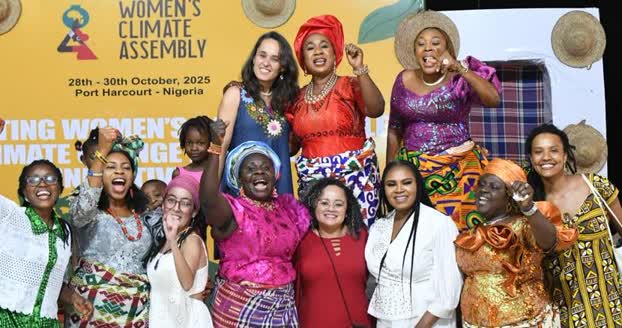
Women from two of the world’s most environmentally challenged zones, the Niger Delta and Amazon rainforest in Brazil, have met in Port Harcourt, the Rivers State capital in a bid to articulate calls for climate justice for the two embattled regions.
Meeting under the aegis of the Women Climate Assembly (WCA), organised by Kebetkache Women Development and Resource Centre, with support from Global Alliance for Green and Gender Action (GAGGA), the Amazonian and Niger Delta women say their coming together aims at pushing global action towards mitigating and remediating the environmental disasters and climate change impacts suffered by their regions and people.
The meeting, with the theme: ‘Promoting Women’s Critical Role in Climate Change Mitigation Initiatives,’ had participants from different communities across the Niger Delta and Brazil.
Executive Director of Kebetkache Women Development and Resource Centre, Dr. Emem Okon, said the key objective of the 3-day WCA meeting, which began in Port Harcourt, on Thursday October 30, 2025, “is to strengthen and unify women led struggle against destructive extraction activities and false solutions to the climate crisis.”
In an opening address to the delegates from the two regions, Dr. Okon said, “This year, Kebetkache gathers women leaders from the Amazon region in Brazil, and local Niger Delta women voices to forge global South-South solidarity, share stories of resistance and resilience and craft actionable demands for a just transition beyond extractivism.
“We are here to build solidarity and advocate for the change. We will identify the challenges, make our demands and continue to amplify voices, until we find solution to address the climate change issues.”
She urged the delegates to engage in dialogues, build awareness and strategy towards challenging the “greenwashing at upcoming forums like COP30, and to reject carbon markets, and advocate for African-led solutions to floods, heat stress, and resource depletion.”
Dr. Okon stressed the need for women to be included in decision-making, while urging governments at the various levels to properly address issues concerning women by allowing them to be part of arriving at decisions that affect them and the society as a whole.
“How are we benefiting from the oil business? Women in the communities that are represented in this conference, how are they benefiting from extraction? Can we move forward without extractivism?
“It needs all of us, including the corporations that are exploiting the natural resources and the government that are giving them the license to reflect. Are there better ways of carrying out extractive activities without harming the environment,” she asked.
Maira do Nasgmento and Carolina de Moura, from Minas Gerais in Brazil and of the Instituto Cordilheira, stressed the similarities in the plight of Niger Delta women and their counterparts in Brazil on the issues of climate crisis and environmental degradation.
They said women bear the brunt of climate change impact, while emphasizing the critical role women play in climate change and mitigation initiative.
Nasgmento and Moura said “it is important to say that women are differently affected by climate change. We are historically working in the care of the family and care of the community and doing this work, invisible work, that women historically are doing, ”
Moura noted that “It’s much more hard in a contaminated environment, in a place where the people are sick because of the problems in the environment. We (women) are the environment. Environment is we. So what happens in the environment happens in our body. The women’s bodies feel differently the impacts of the climate change.”
Maira do Nasgmento and Carolina de Moura agreed that the 2025 Women’s Climate Assembly created opportunity for women from the two countries to work together and develop strategies for pushing global action towards climate justice.
“It’s important also that we want to stop the corporations that are causing the climate change and climate crisis all over the world.
“The problems we already have in our communities need to be solved. We need remediation and to clean the rivers and restore the forests, and clean the reef. And we need public policies to do it and finance programs that goes down directly to the communities,” they said.
Environmental activist, Comrade Celestine Akpobari, stressed the important role women play in the home and society at large.
“I have a wife and I have female children in the house. And I know their importance and the role they play. And the day they don’t support me, throughout that day I will be unproductive outside,” he said.
He stressed the need for the society and governments to be conscious of the role, and urged the women not to be deterred in the pursuit of their God-given function.