 PH Mundial – Port Harcourt Online Newspaper News across the Niger Delta

Related Articles



By Paul Williams
Non-governmental organization, Community Environment and Development Network (CEDEN), has embarked on efforts aimed at strengthening the resilience of community members in the Niger Delta against climate change challenges and manifestations.
Supported by Global Greed Grants Fund (GGF), CEDEN, on August 22, 2025 organised a community forum in Otuabagi community, Ogbia Local Government Area of Bayelsa State, host to Oloibiri Oil Well, to create awareness around climate action and mitigation.
The event, tagged, ‘Community Forum on the Prospects of Strengthening Community Resilience Against Climate Change Challenges/Threats/Problems/Risks in Ogbia LGA,’ paid particular attention to strengthening the resilience of women farmers in the area.
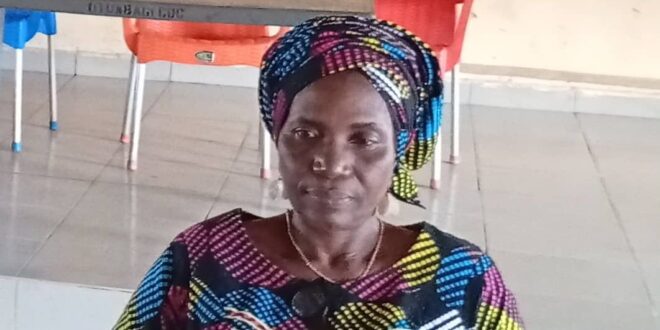
In a paper, ‘Empowering Women to Strengthen Local Efforts for Addressing the Challenges of Human-Environment Conflicts – Towards Enhancing the Prospects of Sustainable Development in Bayelsa State,’ Dr (Mrs.) Gloria Alagbogu noted that the Niger Delta region “is plagued by persistent environmental degradation, largely driven by oil exploitation, gas flaring, pipeline vandalism, and weak regulatory enforcement.
“These activities not only damage the environment but also give rise to human-environment conflicts, including: Struggles over land and water access; Community protests against oil companies and Rising unemployment and insecurity,” she said.
Dr. Alagbogu pointed out that “Women, who are central to natural resource management, especially in agriculture, fisheries, and household energy, face the greatest impact.
“Unfortunately,” she said, “they are excluded from policy-making and community-level environmental governance. Empowering women is therefore essential for both conflict resolution and the sustainability of development interventions in the state.”
Analyzing the situation in Bayelsa State, Dr. Alagbogu listed environmental challenges to include oil pollution, deforestation, gas flaring and climate vulnerability.
She said, “Over 13 million barrels of oil have been spilled in the Niger Delta since 1958. Bayelsa is among the hardest hit. Rivers, streams, and agricultural land are regularly contaminated, disrupting fishing and farming.”
Dr. Alagbogu said deforestation is driven by the need for timber, expansion of urban settlements, and pipeline installations, deforestation has led to soil erosion, biodiversity loss, and increased carbon emissions.
“Daily flaring of gas near residential areas causes acid rain, respiratory problems, and contributes to climate change. Women and children are particularly affected due to longer home exposure.
“Seasonal flooding displaces communities, destroys crops, and disrupts infrastructure. Rising sea levels threaten low-lying coastal areas in the state,” she said.
Dr. Alagbogu, who studied Peace and Conflict at the University of Port Harcourt, noted that the resultant impact on women include loss of livelihood, health hazards, marginalisation in decision-making and Gender-based violence (GBV), adding that women can be empowered through Capacity Building and Education, Economic Empowerment and Political Participation and Leadership.
She called for the gender integration in Environmental Policy, establishment of Gender-Sensitive Funding Mechanisms, especially for women in the rural areas, strengthening of partnerships and collaboration, improved data and monitoring systems and youth engagement and mentorship.
“The human-environment conflicts in Bayelsa State cannot be sustainably addressed without fully recognizing and empowering women. Their unique experiences, indigenous knowledge, and central role in family and community survival position them as natural custodians of the environment. A strategic investment in their education, economic empowerment, and political inclusion will significantly enhance local environmental efforts, reduce conflict, and drive sustainable development. The future of Bayelsa’s environment is deeply tied to the empowerment of its women,” Dr. Alagbogu.